Do you own an old Iisakki Järvenpää knife?
On this page, you will find information about the restoration and repair of Iisakki Järvenpää knives, as well as the refurbishment of *helavyö or Helabelt* (traditional Finnish decorated belts).

Do you own an old Iisakki Järvenpää knife?
On this page, you will find information about the restoration and repair of Iisakki Järvenpää knives, as well as the refurbishment of *helavyö or Helabelt* (traditional Finnish decorated belts).
When Iisakki Järvenpää first began his work as a knifemaker, he wanted to create the finest tools possible to make everyday life easier. Once he was satisfied with a knife's technical qualities, he set out to make it as beautiful as he could. He believed that if a knife is beautiful, it will be well cared for and passed down from generation to generation.
We still follow this very same principle today. However, even a well-maintained knife will eventually need restoration, not to mention one that has been neglected. That is why we repair and restore all puukko knives and other knives made by us. We also stock a wide range of spare parts dating back to the 19th century, allowing us to carry out repairs using original components.
|
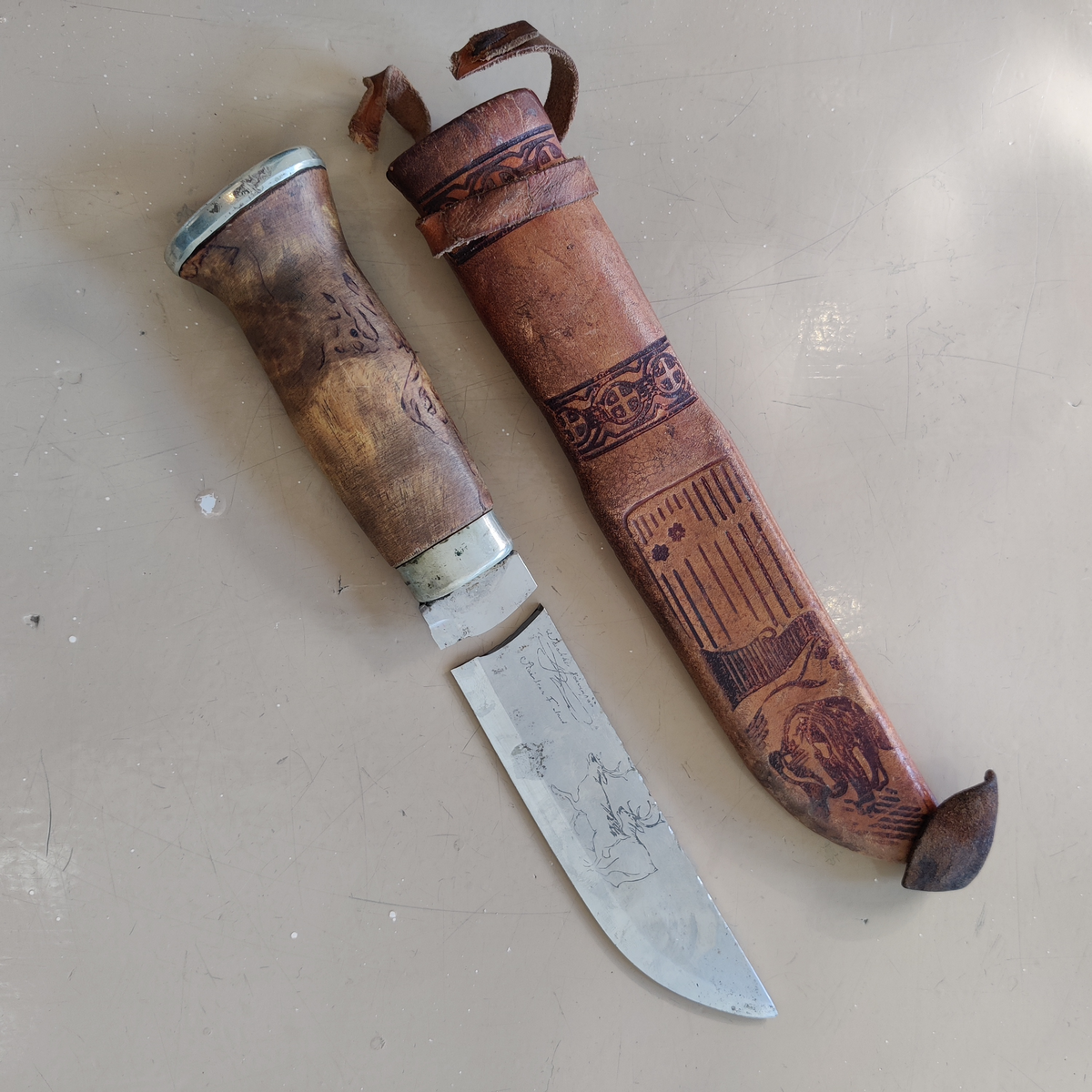
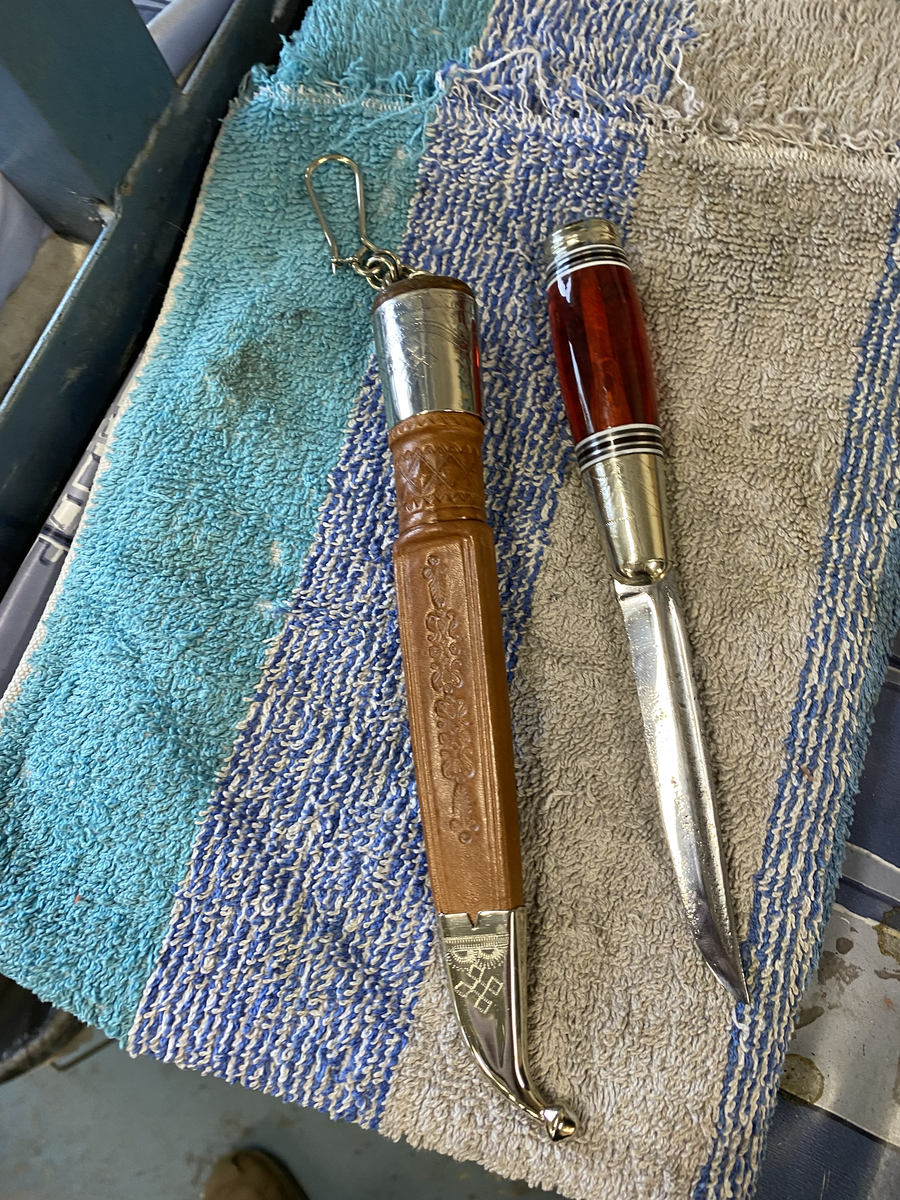
Bear Leuku, before restoration
|
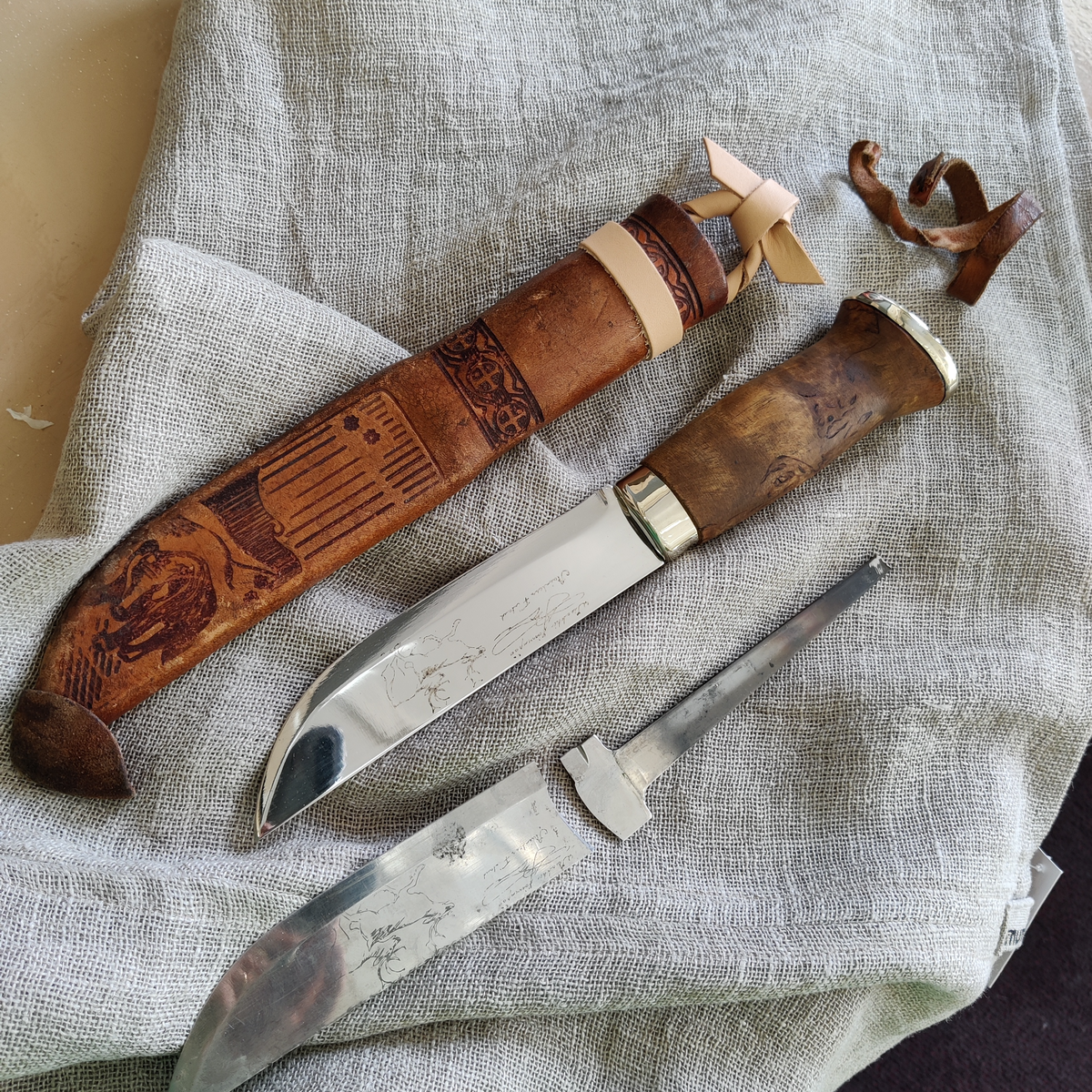
Bear Leuku, restored
|
If you feel your own craftsmanship skills are up to the task of restoration, here are a few tips.
For polishing metal parts, including both blades and ferrules, a paste called Autosol works very well. It is available at auto supply stores. A tube the size of a toothpaste tube costs around €5 and is enough to polish several knives. When polishing the metal fittings on a sheath, be careful not to get any paste on the leather parts.
For oiled handles, we use Uula boiled linseed oil varnish. You can wipe it lightly onto the handle, applying only a very thin coat at a time. Lacquered handles are finished with a thinner-based catalyzed lacquer. At the factory, handles are typically dipped in lacquer seven times, with a couple of light sandings in between. It is best to carefully sand off the old lacquer before applying a new coat.
The most common repairs involve blade maintenance and polishing the metal fittings. Sharpening costs around €5 with us, while polishing and sharpening together range from €10 to €20. Polishing the blade, knife fittings, and sheath fittings of a Horse-Head knife costs around €30–€50. At the higher end of restoration costs is the red double-sheath Härmä knife. Polishing its sheath fittings is extremely labor-intensive, as is restoring the handles. The red color is a water-soluble powder stain topped with seven coats of catalyzed lacquer. Sanding, staining, lacquering, and polishing all the fittings on these knives approaches the price of a brand-new equivalent. However, if the knife is a family heirloom with sentimental value, having it restored is certainly worthwhile.
We are often asked about removing engraved names or logos from the handles of flea market finds, which is practically impossible. So much material would have to be sanded off the handle that it would lose its proper shape and no longer fit the sheath.
Replacing a blade is generally possible on a wooden-handled knife. On a birch bark-handled knife, the handle consists of 50 to 90 small pieces of birch bark, depending on the model, through which the blade's tang runs. These pieces usually do not survive being removed and refitted onto a new blade. While we can make a new handle from fresh birch bark, doing so rarely makes sense because almost nothing original would remain of the knife. The same applies to knives with colored galalith or ebonite handles. These materials become quite brittle with age, creating a high risk of the handle shattering during reassembly. Likewise, the decorative accent stripes at both ends of the handle most often break when the handle is disassembled.
In practice, blade replacement is worthwhile for items such as military course knives. For those, we can reuse the original engraved ferrules and recreate the original engravings on the new blade. The cost of this varies greatly on a case-by-case basis, but it typically falls between €30 and €80. As long as the blade is not broken, we can often salvage even a badly worn blade without replacing it.
Sheath repairs are also possible. Making and attaching a replacement tip ferrule costs around €50, and this includes hand-engraved decorations matching the original. Replacing a leather belt loop is a straightforward job, costing around €10. We can also craft an entirely new sheath to replace a lost or destroyed one; please contact us for a case-by-case quote. To make a new sheath, we need the knife sent to our factory so that the sheath can be custom-fitted. Since both are handmade, there are always slight variations in size and shape.
|
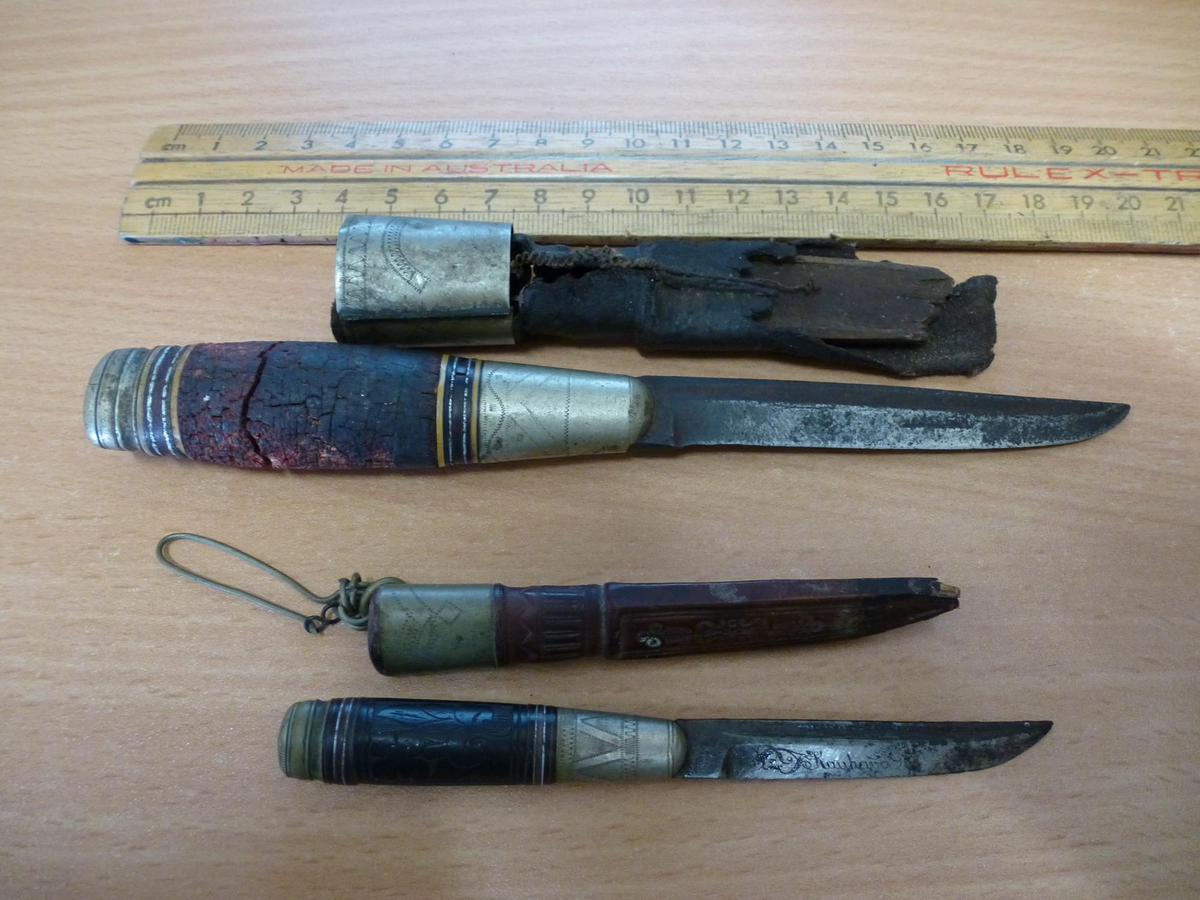
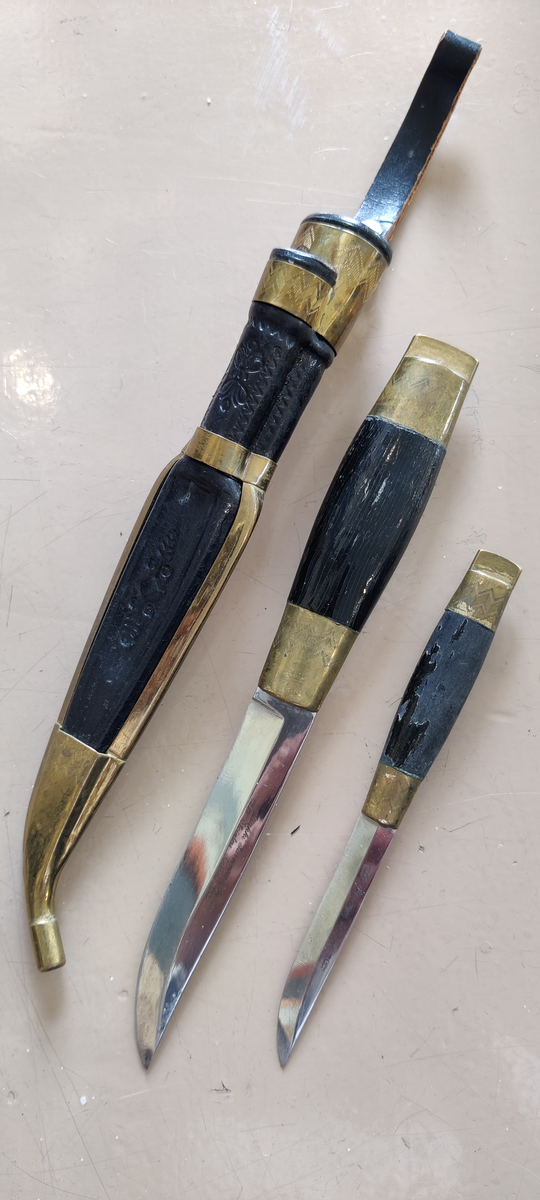
Before restoration |
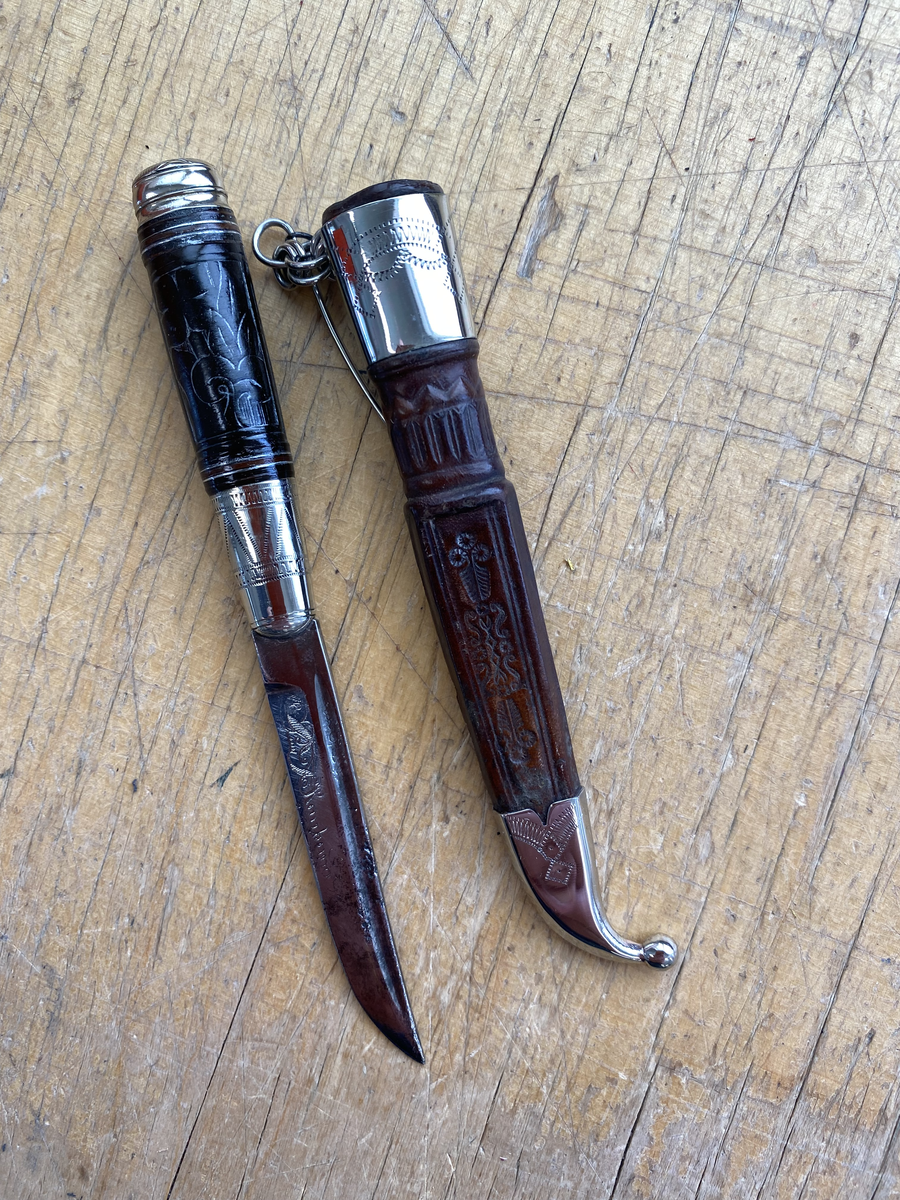
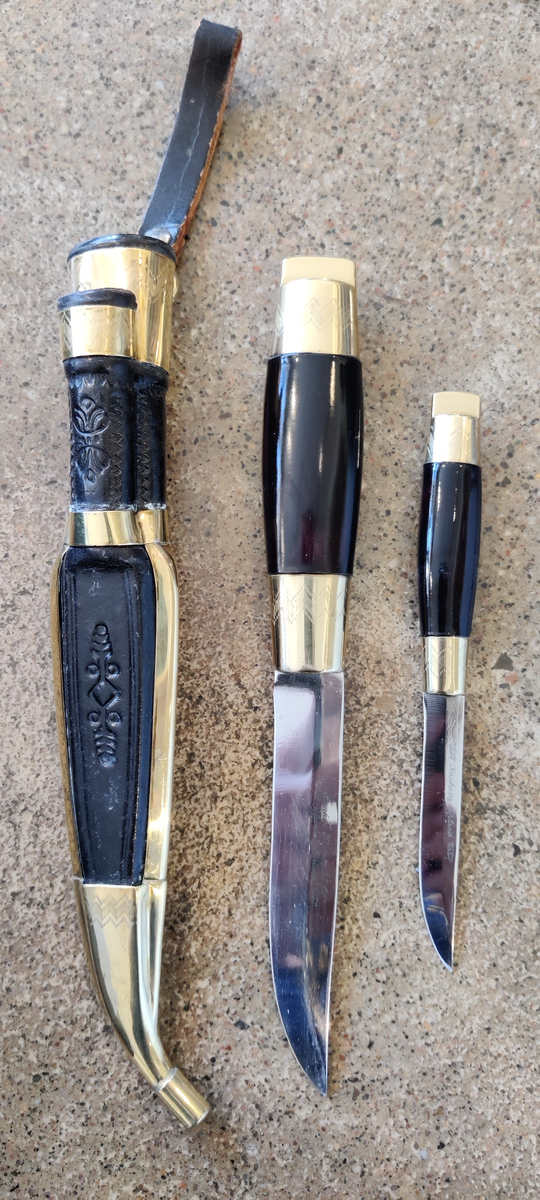
Black-handled, restored |
Celluloid-handled, |
We constantly receive knives of all kinds and ages for repair from all around the world. To get started, please send photos by email to info(at)iisakkijarvenpaa.fi so we can assess what needs to be done and, in most cases, provide a rough cost estimate. Turnaround times vary, as some procedures require drying times and we carry out repairs in between our regular production runs. If you have a specific deadline—for example, if the knife needs to be ready for a birthday—we will certainly do our best to meet it. Restorations normally take a few weeks, though during the summer holiday season and ahead of Christmas, turnaround times are longer.
Every knife can be restored to look and feel brand new. However, that is not what we want to do. During restoration, we repair clear defects and replace missing parts, but we leave the scratches, dents, and color variations intact, because each mark carries the knife's story and history, which we never want to erase.
Grandfather's old knife found in an attic or woodshed is definitely worth restoring, even to be passed down to a great-grandchild. It carries values that cannot be measured in money. It is also a part of sustainable living. Restoring an old tool for continued use is far better than buying a new, especially disposable plastic product—not to mention the sentimental value that comes with it.
Whenever possible, we can also restore knives made by other manufacturers, though naturally we do not stock spare parts for them. Polishing, sharpening, and surface refinishing can certainly be done as long as no parts need to be replaced.
|
Härmä knife, before restoration |
Härmä knife, restored |
An old helavyö belt can easily be restored yourself. You can order a replacement leather strap for the helavyö belt from us, available pre-cut in all colors. The leather straps are at least 160 cm long.
Order a replacement belt leather strap here
The metal fittings should be polished using Autosol paste and a microfiber cloth. Polishing does not require any special skills, though it does take quite a bit of time. If the belt was shortened at some point and the removed fittings are missing, you can purchase individual replacement fittings from us either in person at our factory shop or by inquiring via email. Once polished, the metal fittings can be coated with metal lacquer to keep them shiny for longer, although lacquering is entirely optional.